
How Safe is Your Elevator?
Nearly everyone has heard stories or seen images on TV of the elevator doors opening and no elevator there, or of an elevator falling down the hoistway with sparks flying out from under it. And what about the theory that if the elevator is falling, you should jump just before it hits the bottom?
These and many other stories of elevator failure make for good TV, but they simply can’t happen in the real world. Unfortunately, as these stories spread, some people start to believe them, and many people end up afraid to ride in elevators – even though elevators are considered the safest means of transportation in the world.
In fact, in 2025, there were:
- 65,620 licensed elevators in Ontario, averaging 1,000,000 trips per day.
- 49,000 of those were passenger elevators, with the remainder being freight elevators, dumbwaiters, handicapped devices, and some even more specialized devices.
- 163 registered elevator contractors and 4,679 certified elevator mechanics.
Rental apartment buildings and condominiums accounted for 39% of all the elevators in Ontario. Because of the higher usage, these elevators have the highest incident rate. However, of approximately 365,000,000 trips over the year, only 1,111 incidents were reported to TSSA. 52 resulted in non-permanent injuries; 5 resulted in permanent injuries, and there were no fatalities.
Most elevator issues are door-related. The doors open twice and close twice for every single run. Therefore, they get 4 times the use of any other system. Unless the control system registers that both the car door and the hall door are closed, the elevator won’t move.
With most systems, the doors will reopen and try to close again. Older elevators will do this indefinitely until the door motor burns out or something else gives way. In newer systems, the controller usually shuts itself down after a set number of tries to prevent further damage.
In some cases, if the car door closes but the hall door doesn’t, the elevator control won’t recycle the doors; it just sits waiting for the hall door to close. If someone is inside, that’s when they’re trapped.
How to Help Prevent Issues With Your Elevator
The most common cause of these issues is also the easiest one to prevent. Keep The Tracks Clean.
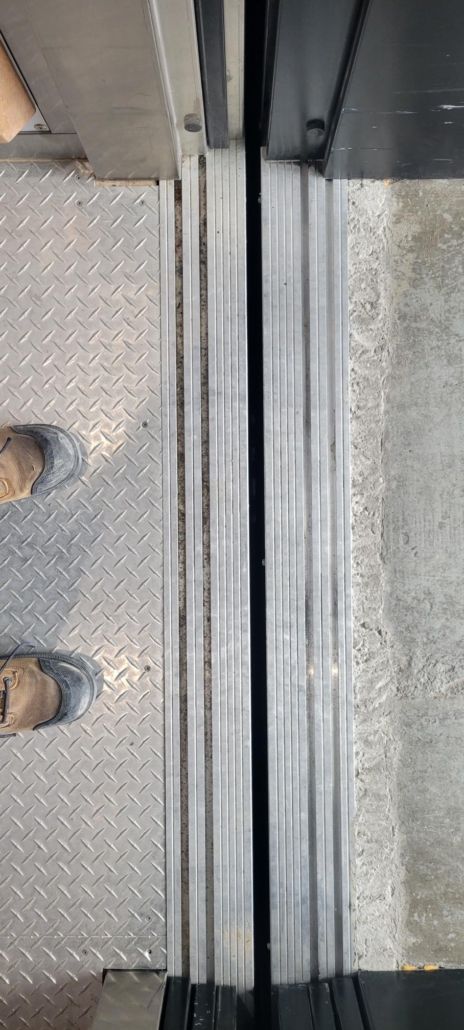
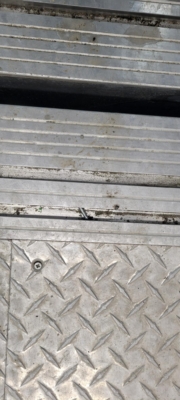 When the elevator doors open, look down, and you’ll see a groove in the sill for the hall door and another one for the car door. A little debris in those tracks will prevent the doors from closing fully.
This pertains most to the hall door sill since there’s no power to open or close the hall door. It relies on the car door to open it and either a weight or a spring to help it close fully. But there’s not much force, or it would slam. (This is also why the hall door can’t open without the elevator being there.)
In winter, it’s especially important to keep up with cleaning the tracks because people bring in little bits of sand and salt on the bottom of their boots, and it only takes one very small piece to create a big problem.
What Happens When Elevators Fail?
Passenger elevators generally fall into two categories: hydraulic and traction.
Hydraulic elevators have a full tank of oil that is either pumped into the cylinder(s) to raise the elevator or drained back into the tank to lower it down. They are usually found in low-rise buildings of less than 5 floors. Traction elevators (the ones seen in movies with the sparks) have steel cables (ropes) that attach the elevator cab to a counterweight, and these can be found servicing any number of floors.
In the event of a catastrophic failure, a hydraulic elevator will descend only as quickly as the oil can leak out. This isn’t free fall; however, it can be quite fast, and injuries have occurred. Luckily, this is also extremely rare, and newer safety protocols are making it even less likely.
Traction elevators are equipped with overspeed safeties. These engage if the elevator descends too fast and, depending on the elevator’s rated speed, will either stop you instantly or gradually (although it’s still pretty quick). These are purely mechanical and completely independent of all the other elevator controls. The harder and faster the elevator tries to fall, the quicker and harder the safeties will grab to prevent it. It physically cannot slide down the hoistway with sparks flying. Modern elevators are also equipped with devices to catch them if they start to drift up, because the counterweight is actually heavier than the cab.
Elevators are equipped with several levels of safety systems and circuits, with built-in redundancies for each. However, because elevator safety systems are very complex (and expensive), they must be maintained by properly qualified and trained technicians. All commercial elevator owners have a legal responsibility to make sure their elevators are properly maintained. So don’t hesitate to ask your elevator service provider questions.
Remember, you’re more likely to be injured cooking your dinner than you are riding an elevator, especially one that is properly serviced and maintained. If you make cleaning your elevator tracks part of your building’s maintenance routine, you’ll help to keep your elevator reliable.
If you’ve tried cleaning your elevator tracks but still have problems with doors closing, etc., call for professional help. Elevator issues can be complex, and some require specialized tools and knowledge to fix safely.
For expert commercial elevator maintenance and repairs, contact Lincoln Lifts and Elevators. Our trained technicians can quickly diagnose and fix any elevator problem, ensuring your elevator is up and running again.
Source: TSSA-Public Safety Report 2025